
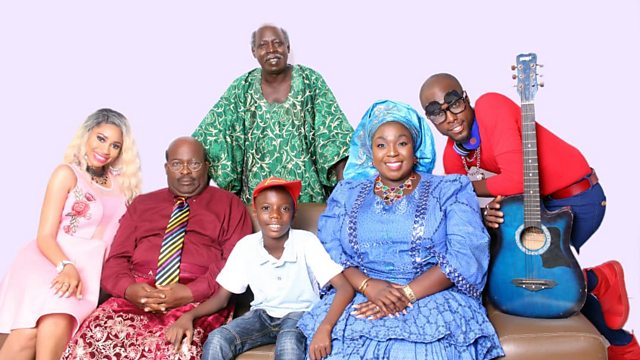
Long before streaming platforms placed an endless library of content at our fingertips, television held a special place in Nigerian homes. In the 1990s through the mid-2000s, children gathered around the family set for weekly TV shows that mixed storytelling, drama, and comedy, creating moments that lingered long after the closing credits.
For many, the programmes below remain timeless markers of an era when TV brought families and neighbourhoods together in suspense and wonder.
No theme song defined Nigerian television like the opening tune of Super Story. Produced by Wale Adenuga Productions (WAP) since 2001, this drama has had emotionally charged plots that mirror real-life struggles. Unlike most television series of its time, it did not revolve around a single set of characters.
Instead, each season introduced a new storyline. One of its seasons, ‘Oh Father! Oh Daughter!’ featuring Sola Sobowale and Bukky Wright, remains the most iconic, telling the tale of Suara, a struggling mechanic whose hunger for wealth led him to sacrifice his family. More than just drama, Super Story was an experience from the early 2000s.
- This Life
This Life, first produced in 2005, was another memorable family drama that, like Super Story, unfolded through multiple storylines rather than a single continuous plot. What set it apart was its suspense-filled narratives, often centred on characters haunted by their past and driven by the desire for revenge. The series tackled moral dilemmas and pressing social issues, weaving them into intricate plots laced with family secrets, betrayal, and the quest for redemption. With its dramatic flair and layered storytelling, This Life carved a place in the hearts of viewers, offering both entertainment and reflection on the complexities of the human condition.
Produced by Amaka Igwe and aired in the early 2000s, Fuji House of Commotion was the ultimate Nigerian family sitcom. It was chaotic, witty, and endlessly funny. It centred on Chief T. A. Fuji, a wealthy polygamist with four wives and numerous children, all squeezed under one roof. The result was nonstop hilarity: wives locked in rivalry, children stirring up mischief, and a patriarch frantically trying to keep order.
Its sharp dialogue, laugh-out-loud misunderstandings, and a theme song that promised the “commotion” ahead made it a weekly highlight for viewers. With memorable characters like Chief Fuji (Kunle Bamtefa), alongside Nollywood actresses Iretiola Doyle and Ngozi Nwosu, the sitcom captured the humorous chaos of polygamous family life.
- Everyday People
Produced by Tajudeen Adepetu and aired in the late 1990s and early 2000s, Everyday People brought Nigerian urban life to the screen with warmth, humour, and relatability. Set around families living in a block of flats, the series captured the joys and struggles of ordinary Lagos residents, weaving stories of love, betrayal, friendship, and survival. Its strength lay in its down-to-earth characters and the balance of comedy with moments of real emotions. Featuring household names like the late Sam Loco Efe and a young Desmond Elliot, who would later transition into politics, the show became a staple of early 2000s television. True to its title, Everyday People mirrored the lives of the kinds of individuals you might encounter in any Nigerian city, making it one of the most relatable and beloved dramas of its time.
Created by Wale Adenuga in 1996, Papa Ajasco and Company is one of the most iconic comedies in Nigerian television history. With its unforgettable lineup of characters — the bald, pot-bellied Papa Ajasco, his long-suffering wife Mama Ajasco, the mischievous Bobo Ajasco, flamboyant Boy Alinco, gold-digging Miss Pepeye, and the bumbling duo Pa James and Pa Jimoh — the show delivered endless laughter through slapstick humour and exaggerated mannerisms. It wasn’t driven by a single plot but by a collection of hilarious sketches that highlighted the quirks of everyday Nigerian life.
- Binta and Friends
Binta and Friends was a beloved series that captured the joys and struggles of growing up, resonating deeply with children and young adults alike. Binta was a bright and disciplined schoolgirl whose character became a role model for countless viewers. Through her interactions with friends, the show highlighted the value of education, the importance of hard work, and the everyday challenges of navigating friendships, school life, and youthful ambitions.
- Face 2 Face
Face 2 Face was a hit sitcom that drew humour and drama from the everyday chaos of life in a typical Nigerian “face-me-I-face-you” apartment block, where multiple tenants lived side by side and conflicts were never far away. The show revolved around neighbours whose constant clashes, misunderstandings, and alliances created a mix of comedy and tension. The show explored themes of ambition, loyalty, and the ripple effects of personal choices, all wrapped in witty dialogue and memorable characters. Its ability to mirror the realities of communal living in Nigerian cities made it both entertaining and instantly relatable to audiences across the country.
- Tales by Moonlight
Tales by Moonlight was one of Nigeria’s most cherished children’s programs, blending entertainment with education through the art of storytelling. Rooted in Nigerian folklore, the show recreated the traditional setting of children gathered around an elder, often called “Aunty” or “Grandpa”, to listen to captivating folk tales. Each episode opened with a cheerful sing-along before unfolding into stories that carried clear moral lessons on honesty, kindness, courage, and community.
- KKB – Kids Know Better
KKB was another groundbreaking children’s programme that gave young people a voice and a stage to showcase their creativity. Airing on Silverbird Television in the late 1990s to 2000s, it combined education, entertainment, and moral lessons in a format that felt fresh and empowering. The show featured children singing, dancing, acting, and sharing their perspectives on social issues, making it both engaging and inspiring for viewers. For many kids of the era, appearing on KKB was the ultimate dream — participants were celebrated like celebrities, and some, like Teniola Akpata, went on to become household names.
Copyright 2025 TheCable. All rights reserved. This material, and other digital content on this website, may not be reproduced, published, broadcast, rewritten or redistributed in whole or in part without prior express written permission from TheCable.
Follow us on twitter @Thecablestyle