
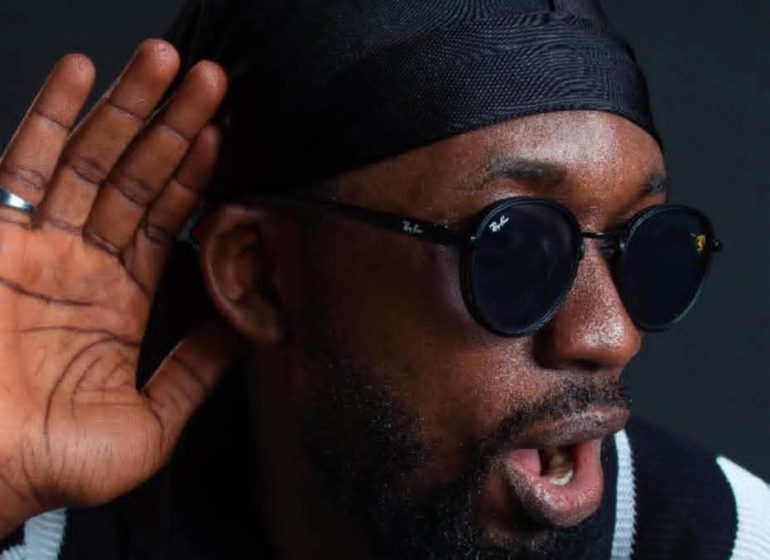
Ayodele Ogunsusi, the Nigerian entertainer better known as One Short Yoruba Boy (OSYB), has meticulously carved out a unique space in Nigeria’s creative industry. His journey is a testament to persistent reinvention, beginning with early experiments in music and skits during his secondary school days and evolving into a multi-faceted career as a radio host, event MC, and voice actor — all while demonstrating remarkable resilience through personal challenges, including an extra year in university.
Now, with a pivotal role in the globally celebrated animated series ‘Iyanu’, OSYB is poised to enter an international spotlight. In this interview with TheCable Lifestyle, he delves into his inspiring journey, the hard-earned lessons behind his unwavering persistence, and his ambitious vision for the future of voice acting in Nigeria.
TheCable Lifestyle: How did your journey into the creative space begin? Was it music, radio, or something completely different that started it all?
OSYB: The journey started for me a while back, in 2003 or 2004. At the time, I was just a young secondary school pupil. Even before then, I had been part of an all-boys band called HBC, which was an acronym for my school. We were dancers and singers. I was a science student because my parents wanted me to become a medical doctor.
I say the journey started around that time because that was when I actively began trying to write music and come up with a stage name. I knew I was talented and had a lot of gifts, but I couldn’t really place my finger on any of them until secondary school.
After leaving secondary school, I got into the Federal University of Technology, Akure, in 2005. That was when things started to get more interesting. I was studying quantity surveying, which was completely different from medicine. I was only studying it because it was the course I was given, not the electrical engineering I actually wanted. I couldn’t really focus on the course. At that point, I was already part of the entertainment team with a few schoolmates who are now popular producers like Dre-sticks and Michael Dennis.
I was in their creative space, writing songs, getting on their projects, doing voiceovers, intros and funny skits. We were all just trying to get involved in everything and find our place in the industry. Around the same time, radio came into the picture. I started off as just a guest on a radio show, then eventually became a consistent guest on one of the shows in Akure, Ondo State. I also spent time in studios, being the extra voice when someone needed backup or a song written.
This continued through 2006 and 2007, when I became a member of a church choir. Even though I was born Catholic and couldn’t join the choir at home, I joined one in school. I was also part of the drama troupe in RHEMA Campus Fellowship and a major dance group. I was actively involved in a lot of things, and that was where I began to hone my skills as a dancer, actor and songwriter.
I watched a lot of cartoons growing up, and all those influences started to show in the things I did, whether it was narrating a drama in my fellowship, doing voiceovers for someone’s jingle on radio or just finding creative ways to express myself. Everything was building up.
In 2010, which was supposed to be my final year in school before I had a spillover, I became more invested in radio. Between 2010 and 2011, I went from being a guest to becoming a Duty Continuity Announcer. From there, I moved on to become a presenter. That was when my voice acting skills really started to come through. I was switching between characters and accents, from American to South African, and from Hausa, Igbo and Yoruba to Pidgin English. I did that for several years.
Eventually, I began to get involved in different productions, including working in the studio with friends who were artists. At some point, I had to leave music and focus more on radio and production. I was doing voice acting, production and everything in between.
So yes, it started quite early for me, but I didn’t even know what it was called until 2011. That was when I fully understood what voice acting meant and got actively involved in it, alongside my work in radio as an OAP.
TheCable Lifestyle: As an OAP, producer, compere and voice actor, how do you balance these roles while staying creatively focused?
OSYB: I think what has worked for me is the fact that I failed a lot in trying to manage each role properly, because for a very long time I wanted to be everything and respected for everything at the same time, which is not a wrong thing. Growing up, we were trained that a jack of all trades is a master of none. But when I came to the realisation a long time ago, I understood that I had to tie everything to one thing. So yes, I’m an OAP. That’s what I could do every day and get paid from in 30 days. But then the things I would do for a few hours on certain days were being a voice actor, producer and compere. I had to find a way to tie all of those to first being an OAP — OAP by day, producer by night, voice actor on weekends, and compere when required. I was able to departmentalise each role, and with the help of people around me who helped me focus on the things that mattered, it really helped. But for the first few years, especially the 2010s, I really struggled with the image.
Over time, being an OAP made it easier. People on radio hear you and say, ‘Oh wow, you have an amazing voice.’ Then I tell them I’m a voice actor, and when they have gigs, that’s free advert for me on air. Being an MC also came in handy, as clients often wanted the eccentric on-air personality they heard. Radio gave me the platform to sell everything else I am, if I was creative enough.
I worked in Ondo state, where I started broadcasting, then in Lagos, Oyo, Ogun, and back to Lagos in a managerial role. That longevity and experience helped me put everything together and departmentalise. But I pushed one thing forward, which is what I advise others to do. If people can’t figure you out, it can be a problem. It might not be if you handle it well, but it could make you seem like an opportunist. However, if they see how well-rounded you are, it works. I had to hone my craft and become too good to ignore.
So yes, being an OAP first, while attaching everything else — an OAP who also comperes events, a voice actor whose work you hear on my radio shows, and a music producer.
TheCable Lifestyle: As someone who is multitalented, what would you say is the toughest part about building a creative career in Nigeria, and how have you been able to push through those challenges?
OSYB: The toughest part about building a creative career in Nigeria is the identity crisis. Before you gain popularity, respect and recognition for your achievements, people often just see you as an opportunist. Many are scared when they find someone who can do many things well, because it makes them feel threatened. If you’re really good at it, that fear grows, so you often have to hide certain abilities and only reveal them gradually. That way, people are surprised when they eventually discover how much more you can offer.
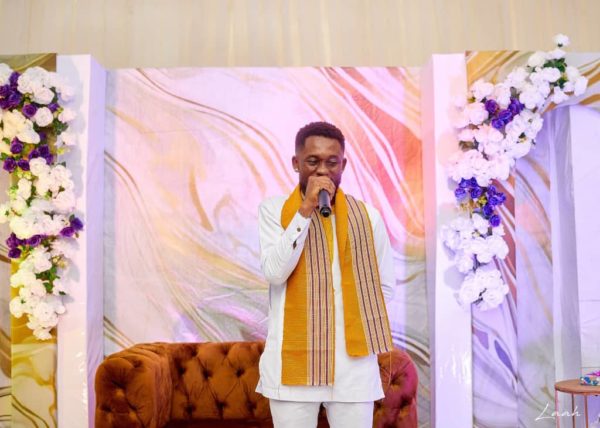
Another challenge is that when you enter the space as a creative who is not yet ‘blown,’ corporate entities often try to take advantage of you. They want to achieve so much with your talent without giving you the reward that comes with it. This can be daunting and draining. If you don’t know how to position yourself properly, it becomes a huge negative.
Thank God for social media, because it helped me understand my challenges. I realised that talent alone is never enough. So I worked on improving myself and learned to isolate my skills depending on the needs of the people I meet. When trust is built through professionalism, then I can reveal the other things I can do. That way, the relationship is based on honesty and transparency, especially in deals where money or rewards are involved.
The people part is the most difficult — building trust, leveraging opportunities without being seen as an opportunist, and proving that you have a clear identity. Many times people say, ‘You do everything, so what exactly are you?’ That perception can make things very challenging. But once you push one thing ahead, people begin to trust your brand, believe in your work, and vouch for your pedigree. At that point, everything else falls into place.
The key is never to lose sight of the goal or faith in yourself.
TheCable Lifestyle: How did the opportunity to voice a character in the animated series ‘Iyanu’ come about, and what was your first reaction when you landed it?
OSYB: Wow, it was huge. At the time, I was working remotely for Spotify, doing digital content as a contractor. I was living in Ibadan when a friend, whom I had worked with on the Africa Check theatre for radio, sent me a message on WhatsApp about an audition. She encouraged me to try it out.
I brought my studio equipment to Lagos to help her record her audition, but I didn’t record mine until the deadline was almost over. I didn’t think I would get the role. When I finally did, I auditioned for different characters — an old man, a young man, a child, even a warlord — and sent everything in. Months later, I got an email that I had been cast as a 12-year-old character.
I couldn’t believe it. I was so excited I couldn’t go back to sleep. Growing up, I had watched Disney animations like Aladdin and The Lion King and even mimicked their voices. By 2014, I had started watching end credits to check if there were Nigerians in international productions. That discovery made me believe I could do it too, so this moment felt surreal.
Later, I had a Zoom call with Paula Gammon to check my studio setup and equipment. After contracts were signed, we began recording with Roy Okpe and Roger, who was the recording engineer in Vietnam. Working with people across the US, Vietnam, and Portugal while being in Nigeria blew my mind.
When season two came, I was nervous about being dropped, but instead, I got recast for another role. We even did some rewrites and re-recordings in early 2024. Then came the trailer, requests for our pictures, and details for how our names would appear in the credits. That was when I got my first placement on IMDb.
Seeing people share screenshots of my IMDb profile and recognizing my voice in the show has been incredible. It feels like a dream come true — every childhood fantasy of being part of something global and putting Nigeria on the map. Honestly, it’s only the beginning, but it already feels like Hollywood calling.
TheCable Lifestyle: What moment during the ‘Iyanu’ voice recording process pushed/ challenged you the most as an actor?
OSYB: Of course, being Biyi — since I started out as Biyi — I gave my best to that role. When we later had to reprise certain roles as older versions of those same characters, it was a different challenge. Big shout out to Paula Gammon and the entire team, who pushed us to be mentally present. They guided us, saying, ‘This is how I want it to sound’, whether like a 12-year-old or a warrior ready to level an entire battlefield.
It was tough, but every day I reminded myself I could do it. I channeled the cartoons, villains, and heroes I grew up watching — from ‘The Avengers’ to so many others — which really pushed me. Playing multiple roles was exciting but also demanding, especially when you had to reproduce the same character months later with the same tone or gruffness.
Even growling and voicing battle scenes was challenging because I was doing it alone in my studio, with only prompts from the voices on my computer. Still, it opened my mind to new possibilities. And with time, it got easier — the more I did it, the more it became a stronger part of who I am today.
TheCable Lifestyle: Would you say switching voices and tones in voice acting comes naturally to you, or is it a skill you had to develop?
OSYB: I would say it came naturally to me because I’ve been doing it for as long as I can remember. Funny story — back in secondary school, I once called a classmate pretending to be a girl, and we actually had a full conversation. It’s something I’ve been able to do since childhood, though I didn’t know it was called voice acting then. In recent times, I’ve had to focus on improving it, taking classes once in a while so I can do it professionally. It just switches naturally, and I’m grateful to God for the talent.
TheCable Lifestyle: Do you see ‘Iyanu’ as a game changer for Nigerian animation on the global stage, or just the beginning of Nollywood’s animation journey?
OSYB: I will say it’s a game changer and it’s going to change Nigeria’s outlook on the global scene beyond animation and Nollywood. I know there is Iwaju and now Iyanu. Yoruba has a lot of mythology including Oya, Sango, Obatala, and in Igbo land there is Amadioha, which I would love to see in an animated series. I think it will be a good way to showcase Nigerian culture, and the success of this animation will put us on the map in a different light. I loved the fact that Nigerian actors who sounded Nigerian were recruited. It’s good to see Nigerian actors trusted to deliver on the level of Disney and Discovery. It’s a game changer that highlights our talent, drive, spirit, strengths, and possibilities for the Nigerian movie and animation industry. It will put everybody on the map. Big shout out to everyone on the team. I think it’s way up there and will truly change the game.
TheCable Lifestyle: What has been the most unexpected or touching feedback you’ve received from ‘Iyanu’?
OSYB: It’s been people calling to say ‘you don blow’ or jokingly asking me for money. There’s been so much love, with friends saying they always knew something good would come out of what I was doing, even when it didn’t look like the best path at the time. A lot of people have been genuinely positive and proud to see someone they know personally being part of something this big. Some even send me screen recordings of my scenes in the series. It’s been fun, heartwarming, and really amazing. The love, the requests, the support — I appreciate it all. Of course, people also want to know how much I made from it, but overall, it’s been such a rare privilege and an experience I’m truly grateful for.
TheCable Lifestyle: With your experience behind the mic in both radio and animation, where do you see voice acting headed in Nigeria? And what do you think is still missing or needs more development?
OSYB: Voice acting is really blowing up in Nigeria. I see a lot of people hosting masterclasses, and I’ve facilitated a few trainings myself, both in person and virtually. People are beginning to realize how much potential there is in this field.
That said, we need more sensitisation and, importantly, some form of union or professional body. Many Nigerian voice actors are ignorant of their rights and end up being cheated out of fair pay because they don’t even know the true value of their voices. With AI now able to model and use voices without consent, it’s even more urgent to have proper structures in place.
We can learn from how the music industry evolved — now artists earn royalties and have better deals. Voice actors deserve the same. Our work isn’t just about reading lines, it’s about acting, delivering emotions, representing brands, and creating real connections that AI still can’t replicate.
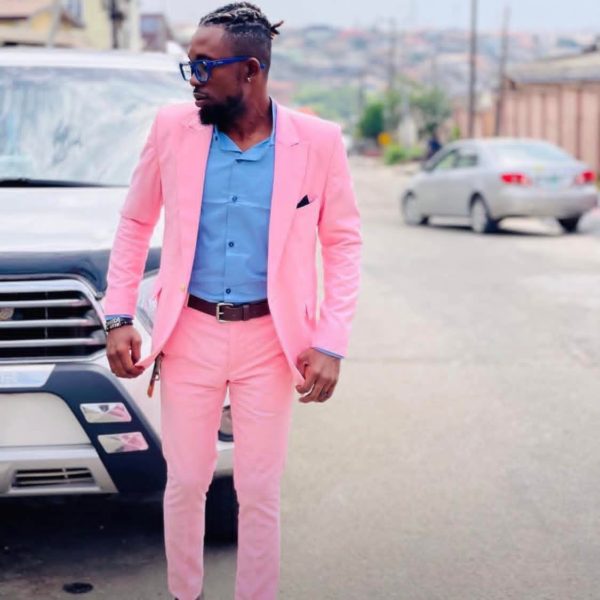
Right now, people sometimes bypass professionals because they can get someone cheaper, even if the quality is lower. That’s why we need enlightenment, professionalism, and standard industry rates. Globally, voice acting is a billion-dollar industry, and Nigeria can tap into that. The fact that international studios came here to recruit talent for Iyanu shows how much potential we have.
If we unionise, have proper representation, and enforce fair payment structures, voice actors in Nigeria can be respected for their craft, positioned on a global stage, and rewarded just as they should be.
TheCable Lifestyle: Do you have a dream role or a particular project you’ve always wanted to do?
OSYB: I’ve followed a lot of voice actors and entertainers over time — people like Jim Carrey, Eddie Murphy, Robin Williams, and Gbenga Adeboye. Jim Carrey’s story really inspired me. He once said that while he was homeless, he wrote himself a check for $10 million and carried it in his wallet for years. Fifteen years later, he landed a role that paid him exactly that amount.
That stuck with me, so on my X page I pinned a post declaring that one day I’ll be paid $1 million for a single voice-over or jingle. It’s a goal I’m holding on to. I’m also aiming high — I’d love to take over Trevor Noah’s job someday, and of course, I hope to work with some of the biggest brands in the world in the near future.
TheCable Lifestyle: Any upcoming projects that should be expected as well?
OSYB: There’s a lot in the works. I’m currently working on a personal voice acting project where I’ll be showcasing myself as multiple characters, and that’s coming very soon. I also have a podcast on the way — one that’s definitely going to shake a few tables. It ties into everything I’ve done as a broadcaster, but with more freedom. Unlike radio, where there are restrictions on what and how you can say things, a podcast allows for more openness, and I’m really looking forward to exploring that. Beyond these, there are several other exciting projects in the pipeline.
Copyright 2025 TheCable. All rights reserved. This material, and other digital content on this website, may not be reproduced, published, broadcast, rewritten or redistributed in whole or in part without prior express written permission from TheCable.
Follow us on twitter @Thecablestyle