
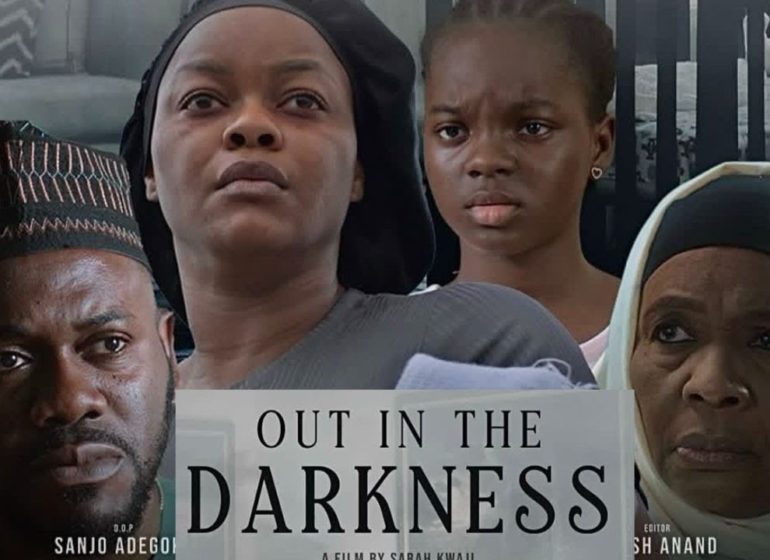
‘Out In The Darkness’, a film centred on postpartum psychosis and the debut production of Sarah Kwaji, premiered in cinemas across Nigeria on July 4.
I was drawn to watch the movie after hearing lead actress Kehinde Bankole speak passionately about her role and how emotionally exhausting it was to embody the character, which piqued my curiosity. After seeing it, I found the film thoughtfully explores postpartum psychosis through spoken words, silence, and the emotions in between. However, its slow pacing is both a strength and a weakness; it would have landed more powerfully had it known exactly when to end.
SYNOPSIS
Bolu, a new mother, is drowning in postpartum darkness. With each passing day, vivid hallucinations pull her deeper, pushing her to the edge. Dismissed by doctors, silenced by stigma, and spiralling alone, she and her baby teeter on the brink of danger.
THE STRONG POINTS OF THE FILM
One of the film’s strongest points is the way the story was told. There wasn’t too much said, yet every scene, from the silence to the body language, carried meaning. ‘Out In The Darkness’ explored postpartum psychosis to the last detail, shedding light on the signs, symptoms, and possible solutions. While it’s not the first film to address the condition, it understood the weight of the topic and did justice to it. What stood out most was how it also captured the toll on the partner and loved ones. It also demonstrates how families associate mental health with spiritual problems. With the way the story unfolded, Bolu’s pain and anxiety could be felt in every scene she appeared in.
The cast brought their best foot forward. Every performance felt intentional, with each actor embodying their role in a way that made the emotions deeply felt. Kehinde Bankole was outstanding as the mother grappling with psychosis, not just in her words, but in how she moved, breathed, spoke, and held her baby. It was raw, believable, and emotionally moving. Deyemi Okanlawon convincingly played the frustrated husband, lost and confused as his once vibrant wife becomes unrecognisable. Tina Mba owned her role as the dramatic mother. Every actor clearly understood their assignment and delivered with depth and conviction.
The cinematography, costume, and makeup were decent, nothing groundbreaking, but they served the story well. The visual tone was soft and grounded, matching the emotional weight of the film. One standout was the makeup used on Kehinde Bankole to reflect her exhaustion and mental decline. It was subtle yet effective, showing the realism of her postpartum state without overdoing it.
THE WEAK POINTS OF THE FILM
The major flaw of Out In The Darkness lies in its pacing. While the slow tempo initially works, drawing you into the emotional core of the story and allowing the pain to settle in, it eventually begins to drag. At some point, it feels like the narrative circles around the same emotions without moving forward, making certain scenes feel repetitive and stretched. You start longing for the next beat, the next reveal. By the time the film reaches its conclusion, it takes on the tone of a documentary, focusing more on creating awareness about postpartum psychosis than delivering a dramatic resolution to the story. That shift slightly weakens the emotional impact it had built up earlier.
FINAL THOUGHTS
‘Out In The Darkness’ gets a 6/10
Copyright 2025 TheCable. All rights reserved. This material, and other digital content on this website, may not be reproduced, published, broadcast, rewritten or redistributed in whole or in part without prior express written permission from TheCable.
Follow us on twitter @Thecablestyle