
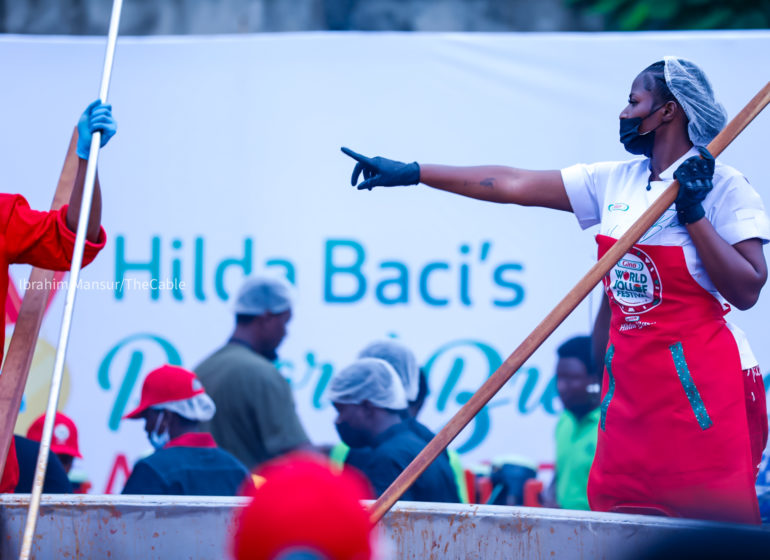
If anyone ever questioned the enduring appeal of Naija Jollof, Hilda Baci’s record-breaking attempt to cook the largest pot of Asun Jollof Rice in an eight-hour open cooking session at Eko Hotels and Suites, Victoria Island, Lagos, put all doubts to rest.
The event pulled thousands of food lovers and curious youngsters, ignited national pride like her Guinness World Record cook-a-thon did, and further cemented her place as a cultural force. But beyond the steaming plates of rice and the cheering crowds, the Fest is packed with lessons and gems for anyone in need of clarity and direction.
And then came that unexpected twist, Pastor Bolaji Idowu of Harvesters International Christian Centre, praying for her. In that moment, Hilda broke down in tears. It was raw. It was human. It reminded everyone that behind the chef and entrepreneur is a young woman carrying the weight of dreams, expectations, and resilience.
- THE WINS
Strong Media Coverage and visibility
From primetime TV slots to viral blog posts, the Jollof Fest had no shortage of attention. For more than 24 hours, Hilda’s name dominated the media conversation, not just as “the Guinness World Record chef,” but as a young woman bold enough to turn food into a cultural festival. That kind of visibility is priceless because it keeps your name sticky in the public’s memory. She didn’t just trend; she owned the narrative.
A Crowd That Spoke for Itself
Events live and die by turnout, and Hilda delivered. The sheer size of the crowd proved her power to move people offline, not just on Instagram, showing her growing influence. Thousands didn’t just come to eat rice; they came because of her. That kind of pull shows a level of influence most entrepreneurs dream of. It was grassroots community-building in action.
Smart Guinness Record Leverage
It’s one thing to break a world record, but it’s another to milk it for brand continuity. Hilda did the latter. By tying the Jollof Fest to her cook-a-thon fame, she created a seamless story arc: from breaking records to building festivals. It gave the event instant credibility and reminded everyone that her achievements aren’t one-hit wonders.
She said in an interview: “Then it took us about nine months to plan this event and it took us almost nine hours to make the entire meal,” she revealed.
Pride in Naija Jollof
Let’s be honest, nothing stirs Nigerian hearts quite like Jollof. The Fest tapped into that national sentiment. It wasn’t just a food party; it was a statement of identity. In a world where culture is currency, Baci positioned Naija Jollof as a cultural export, something to be celebrated, preserved, and even sold to the world.
High-Engagement, Emotional Moments
The Fest wasn’t just about eating and dancing. It was layered with emotion. The tearful prayer moment, the joy of the crowds, the laughter between friends, Nigerians united by a dream of their fellow citizen, these are the kinds of memories people talk about long after the last plate is cleared. They don’t just build hype; they build loyalty. You can’t buy that kind of emotional connection with any marketing budget.
Inspiration for Emerging Chefs
Perhaps the most underrated win of all: the Fest gave hope to younger and lesser-known chefs. Watching Hilda turn her passion into a movement showed others that dreams in the culinary space are valid. It sent a clear message: food can be art, business, and legacy all at once. That inspiration ripple might be her biggest legacy.
- THE MISSES
Missed Thought Leadership Angle
Yes, Hilda showed off culinary brilliance, but she missed the chance to frame herself as a thought leader. Imagine if she had positioned the Fest as not just “a food festival,” but as a conversation starter about African gastronomy, food tourism, and entrepreneurship. That would have elevated her brand from entertainer to industry voice. Events can make you visible, but thought leadership makes you unforgettable.
Giant pot collapse
The most talked-about setback came when the giant pot of Jollof collapsed during the weighing process, an unexpected twist that went viral and momentarily overshadowed the achievement. Beyond that spectacle, reports also suggest the rice quantity had to be scaled down, raising questions about planning and logistics. Added to these were a handful of technical and organisational challenges, from managing the crowd to executing the cooking process itself. These hiccups did not erase the significance of Hilda’s record, but they highlighted the importance of tighter coordination and stronger structures in future editions.
Limited Brand Collaborations
Yes, she had a headline sponsor. But imagine other brands were part of this. Envision fashion or tech brands tying their visibility to the Fest. It could have been a playground for multi-industry collaborations, giving the event staying power beyond the weekend. Right now, it feels more like a culinary party than a cross-industry movement.
Insufficient Global Media Leverage
The Fest trended locally, but it could have been so much bigger. With the right PR team, CNN’s food desk, BBC Africa, or even The New York Times’ Lifestyle could have covered it. That would have shifted Hilda from a Nigerian darling to a global culinary ambassador. In today’s world, local buzz is good, but global attention is better.
Little Policy and Industry Engagement
This was also a missed chance to court government and industry players. Imagine the Nigerian Tourism Board using the Fest as a case study for food tourism. Or agricultural boards discussing how Jollof culture drives rice demand. Hilda could have tied her brand to national policy conversations, making her more than an influencer — a stakeholder in the creative economy.
No Clear Marketing Identity
Here’s the blunt truth: the Fest lacked a unifying brand. No catchy slogan. No memorable tagline. No distinct brand identity that could be stamped on T-shirts, digital posts, or even merchandise. Without a strong marketing hook, it risks being remembered as “that big rice party” instead of a timeless cultural festival.
- THE LESSONS
If there’s one thing the Jollof Fest reminded us, it’s that visibility is currency. Being seen is more than vanity — it’s strategy. Hilda proved that staying visible keeps you relevant, bankable, and top-of-mind.
She also showed that culture is a brand asset. By centering the festival around Jollof, she tapped into something every Nigerian feels deeply about. That’s a reminder to entrepreneurs everywhere: when you tie your brand to cultural codes, you win both hearts and loyalty.
But beyond visibility and culture, the Fest underscored that emotional connection always outlasts hype. Nobody will remember exactly how many plates of rice were served, but they’ll remember Hilda’s tears when Pastor Bolaji prayed for her. They’ll remember the joy of the crowds and the communal energy. Facts fade, feelings stick.
Another lesson? Think local, but amplify global. The Fest had all the ingredients of a global story — vibrant culture, food, identity, and youth energy, yet it stayed mostly within African media circles. With deliberate global PR, Hilda could have sparked conversations in New York, London, and Dubai. That’s the kind of amplification today’s entrepreneurs must aim for.
And finally, the Fest showed that visibility without strategy is incomplete. Being seen is powerful, but being positioned is where the magic happens. If visibility isn’t tied to leadership, partnerships, or policy influence, the spotlight can quickly become fleeting.
What Next for Hilda?
Hilda’s next chapter is even more important than her last win. She can turn the Jollof Fest into a franchise, Lagos today, London or Accra tomorrow. She can also position herself as a thought leader on African gastronomy, food tourism, and culinary entrepreneurship, creating masterclasses or bootcamps. Finally, deeper strategic partnerships with global food brands, beverages, and tourism boards can give the Fest weight beyond entertainment, making it both culture and commerce.
Kehinde Ajose is an accomplished visibility strategist and media practitioner with a passion for helping individuals and organizations achieve their goals through effective storytelling and brand promotion.
Copyright 2025 TheCable. All rights reserved. This material, and other digital content on this website, may not be reproduced, published, broadcast, rewritten or redistributed in whole or in part without prior express written permission from TheCable.
Follow us on twitter @Thecablestyle