
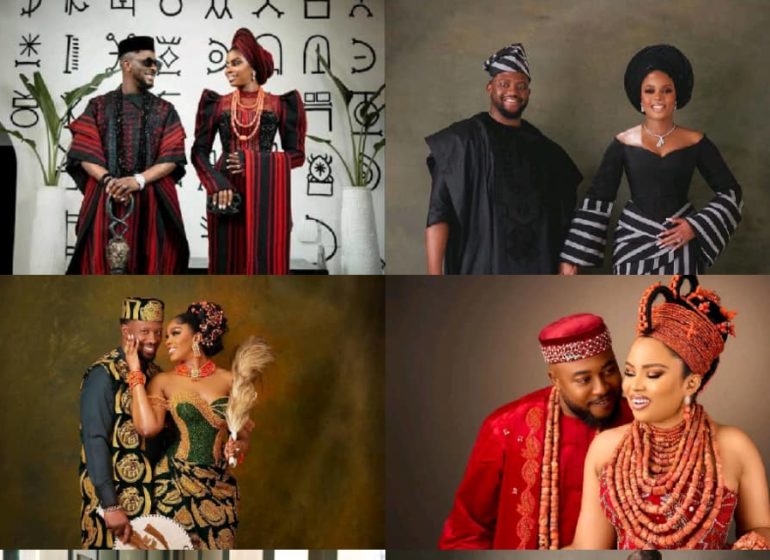
In Nigeria, traditional wedding festivities are far more than just ceremonies; they are a powerful expression of identity, community, and cultural pride.
For many Nigerians, a traditional wedding is not merely the union of two individuals, but the joining of two families, two lineages, and sometimes even two tribes. It is a vibrant celebration rooted in centuries-old customs, where music, fashion, food, and rituals converge to honour ancestry and heritage.
With fashion often taking centre stage during these ceremonies, TheCable Lifestyle takes a look at some outstanding wedding outfits from different tribes.
1. Yoruba
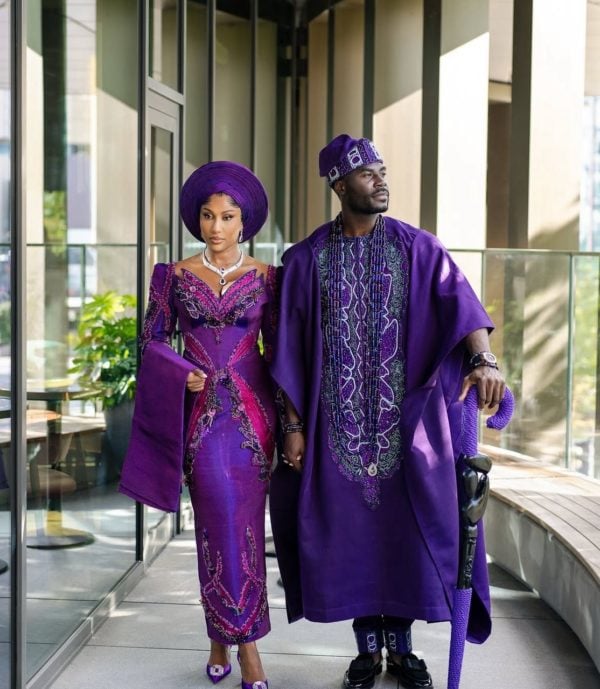
At Yoruba traditional weddings, the bride wears richly woven aso-oke in bold colours, styled as an iro (wrapper), buba (blouse), or gown with a matching gele (headwrap) and ipele (sash). She is adorned with coral beads and jewellery and may carry a decorative fan.
The groom, on the other hand, is clad in an agbada, a large flowing robe made from aso-oke or brocade, layered over a matching buba and sokoto (trousers). He also wears a fila (cap) and completes the look with leather sandals or shoes and coral beads.
2. Igbo
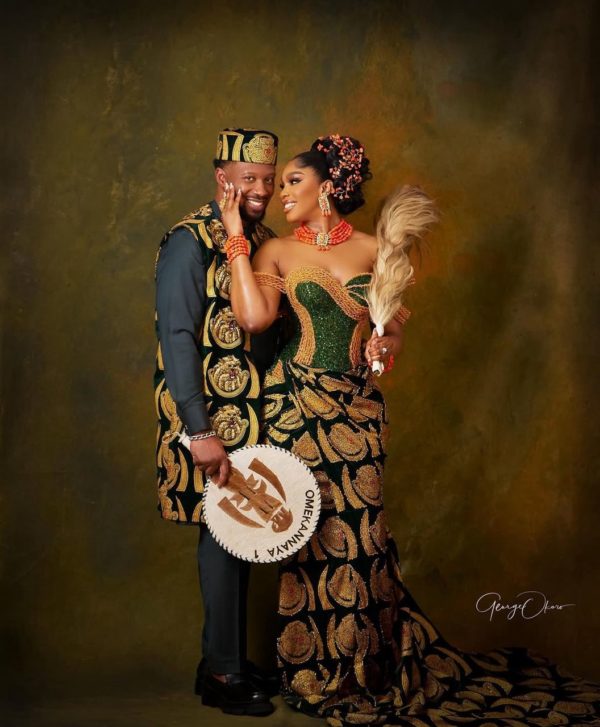
Igbo brides wear vibrant, form-fitting George fabric or lace wrappers and blouses, and sometimes gowns made from the traditional isi agu material. Their look is complemented with coral beads on the neck, wrists, and hair, often styled with a beaded headpiece (okpu agu). They may also carry a fan or a beaded staff.
The groom typically wears an isi agu (lion head-patterned shirt), often paired with black trousers and a red cap (okpu agu) signifying chieftaincy or prestige. He accessorises with coral beads and often wields a traditional walking stick.
3. Hausa
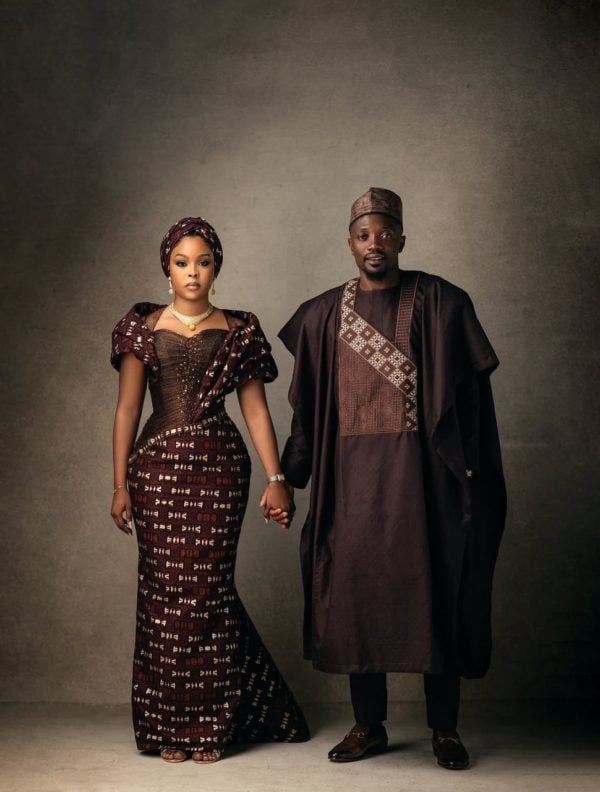
Hausa brides are often clad in elegant lace or silk dresses called Kampala or Zani, which are richly embroidered and embellished. Their look is completed with henna designs, gold jewellery, and a matching veil or shawl.
Most Hausa grooms are adorned in a babban riga (a flowing embroidered robe), worn over a jalabiya or kaftan, with a fula or Hausa cap. The fabrics are usually grand, in whites, creams, or bold hues, with intricate embroidery.
4. Edo
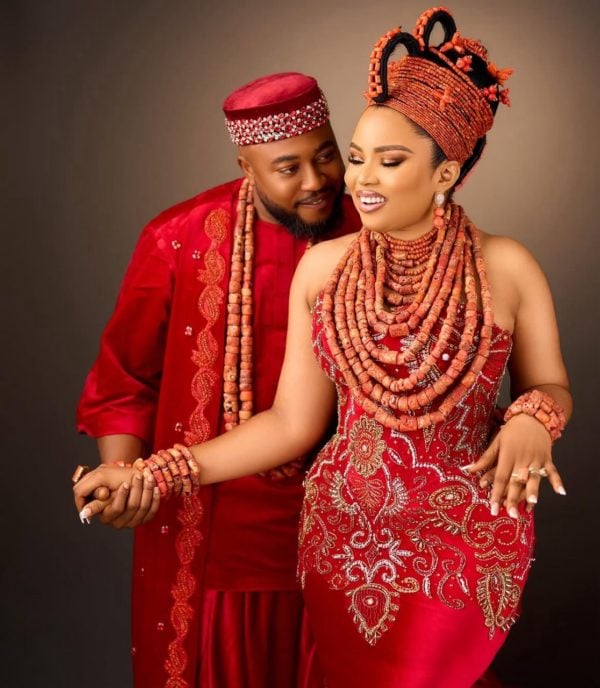
Edo brides exude royalty in richly beaded lace or velvet wrappers and blouses or corsets, often in bold reds, golds, or coral tones. Their standout feature is the okuku—a beaded coral crown—paired with multiple strands of coral beads on the neck, wrists, and chest.
The grooms look dapper in a white shirt and wrapper (George or velvet), often paired with a richly embroidered velvet or lace outer garment. They also wear multiple coral bead strands, a matching cap, and may carry a traditional walking stick.
5. Tiv
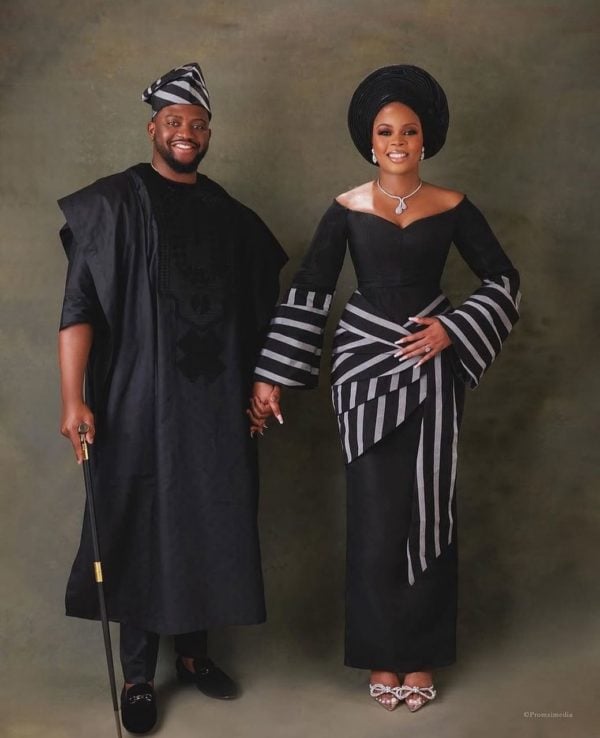
Tiv brides are adorned in the distinctive black and white ‘A’nger’ fabric, often wrapped as a two-piece around the chest or waist. They accessorise with beads, head ties, and intricately braided hairstyles.
The same A’nger fabric is also used by the groom, either as a wrapper tied around the waist or sewn into a tunic-style outfit. They may carry a traditional walking staff and wear a cap made from the same fabric.
6. Idoma
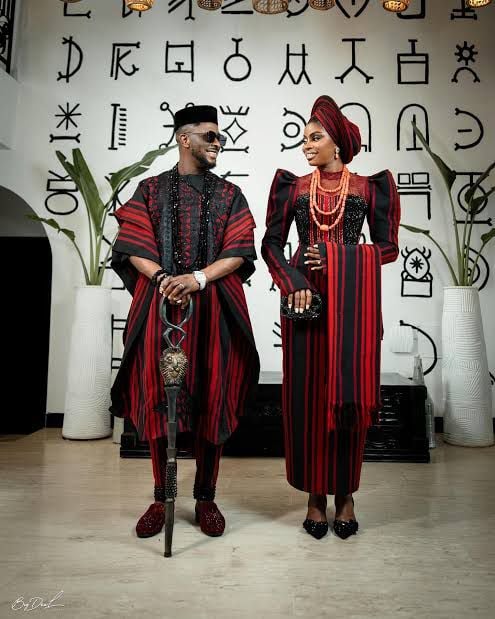
Idoma brides wear a distinct red, black, and white striped ‘apa’ fabric. They typically wrap it as a skirt and pair it with a matching blouse or a stylishly tailored dress. The look is completed with beaded jewellery and a headband or crown. Henna designs may be applied to her hands for extra elegance.
Idoma grooms also wear the apa fabric, either as a wrapper or sewn into a traditional shirt or tunic. They usually complement the look with a red cap, beads, and sometimes a walking stick or horsetail whisk.
Copyright 2025 TheCable. All rights reserved. This material, and other digital content on this website, may not be reproduced, published, broadcast, rewritten or redistributed in whole or in part without prior express written permission from TheCable.
Follow us on twitter @Thecablestyle